AI Is Finding Security Weaknesses Faster. Could It Also Transform Cyber Defence?
AI-assisted security research can help specialists analyse software and identify weaknesses, but a finding is only the beginning of a defensive response. The recent PHP disclosure offers a concrete case to examine: what AI contributed, what maintainers and security teams still had to do, and how businesses can use similar capabilities without treating automated analysis as an autonomous security team.
What the PHP disclosure says
In an announcement dated 21 October 2026, OpenAI said a model it calls GPT-5.6 Sol identified a critical PHP flaw through its Patch the Planet initiative. OpenAI also said Wiz independently discovered and reported both vulnerabilities, while PHP maintainers led the fixes and release. OpenAI described the work as a coordinated effort involving researchers, maintainers, security providers and infrastructure partners. This is AI-assisted discovery and coordinated defence; it is not evidence that a model independently exploited systems or deployed a fix.
PHP’s own security notice and release information are the right sources for operators to establish whether their software is affected and what supported update applies. The practical instruction for a business is to follow the maintainer, hosting provider and security supplier’s current guidance. An article about AI does not replace version-specific vulnerability management, and it should not encourage readers to test public systems without authorisation.
Why AI may help specialists analyse complex systems
Security teams handle large volumes of code, alerts, logs, vulnerability reports and configuration information. AI may help search this material, compare patterns, summarise evidence, group related alerts or suggest where a specialist should look next. The potential value is not that a model “understands security” in every situation. It is that a bounded analysis task may become faster or easier to prioritise when the inputs are relevant and a qualified person can check the output.
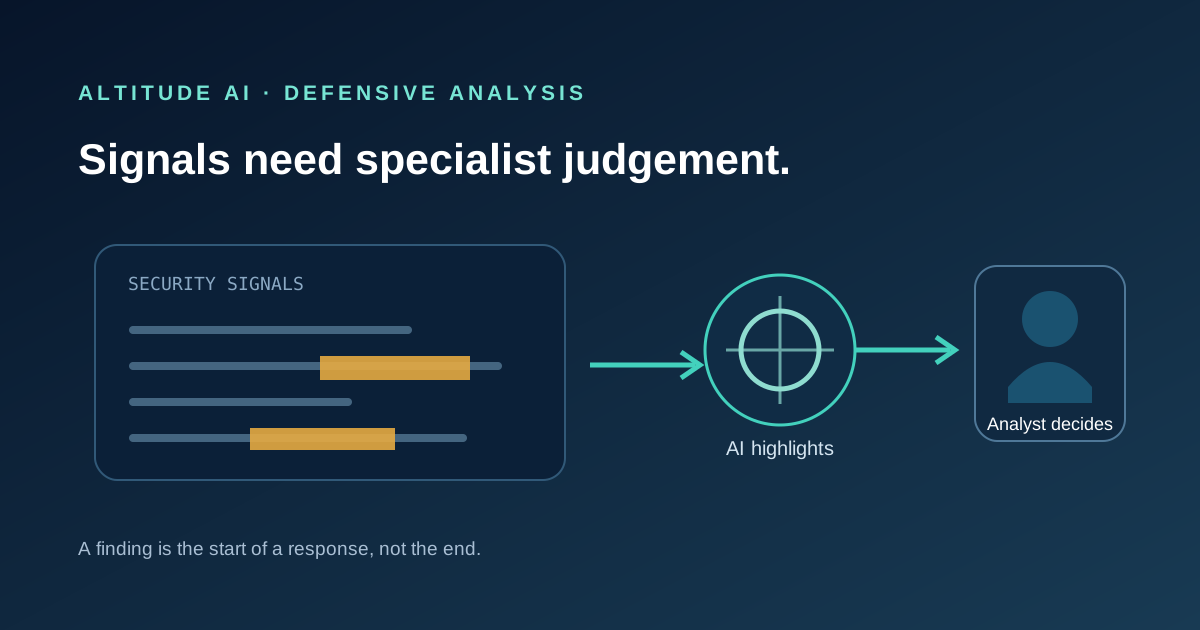
The same broad pattern appears in other analytical work: AI can sift, organise and draft, while people validate the context and decide what to do. A finding may be a duplicate, a false positive, irrelevant to the deployed version or more serious than its initial summary suggests. An analyst still needs evidence about affected assets, exposure, exploitability in the actual environment and the consequence of a proposed change.
Where the defensive opportunity could be
Possible applications include helping prioritise vulnerability backlogs, triaging security events, searching threat intelligence, summarising an incident timeline, comparing a proposed change with a known configuration, or drafting a remediation plan. These are potential use cases, not a claim that every product can perform them reliably or that the PHP work used all of these capabilities. The business should test the specific task and product rather than generalise from one high-profile research announcement.
Keep the workflow bounded. An AI system might prepare a ranked list of alerts for an analyst, but an organisation should not assume it can safely disable accounts, block network traffic, alter production systems or delete files without a separately assessed approval model. Automated containment can be appropriate in some mature environments, but only where scope, impact, rollback and escalation have been tested for that system.
The limits: context, confidence and consequences
AI can miss an issue, overstate a weak signal or recommend a change that solves one problem while creating another. It may lack the organisation’s architecture, business priorities or contractual requirements. Security information can be highly sensitive, including source code, customer records, incident evidence and internal network details. Before sharing it with a service, determine what data is sent, who can access it, how long it is retained, whether it can be used for training and what terms apply.
Human oversight should be linked to impact. A summary or prioritisation recommendation may need analyst review; a change that interrupts a live service or affects customer data needs a stronger authorisation path. Preserve an audit trail of inputs, recommendations, decisions and outcomes. Agree who handles uncertainty and false positives. Ensure the process can be paused and that responders can continue manually if the AI service, connector or supporting data is unavailable.
Evaluate the work, not the spectacle
Choose a repeated task and establish a baseline: analyst time, time to triage, proportion of useful alerts, corrections, missed issues and operational impact. Run the AI alongside the existing process first, using approved data and a clear review method. Compare like with like, include time spent checking suggestions and track both false positives and failures to identify relevant issues. A model’s benchmark or an impressive discovery does not prove that a specific business will get the same result.
Add the cost of licences, integration, data handling, training and specialist oversight. Define the point at which the pilot should stop or change direction. If review effort exceeds the time saved, data cannot be handled safely or the system cannot explain its scope, reconsider the design. For the wider decision-rights question, see When AI Starts Making Decisions. The focus here is how AI supports security analysis and response, not a replacement for vulnerability management or technical security controls.
AI can support defence; people remain responsible
The PHP case is notable because it shows a chain of work: a model-assisted finding, independent research, maintainer-led fixes, coordination and deployment guidance. The value comes from connecting analysis to responsible action. A vulnerability is not resolved when an AI names it; organisations still need to establish exposure, apply the appropriate fix and verify the result.
For businesses considering AI in security operations, start with a narrow analysis or preparation task, test it against real but controlled examples and retain an accountable specialist. Altitude AI can help evaluate the workflow and business case; technical controls and incident response should be assessed with appropriately qualified security specialists.