What Happens When Your AI Gets It Wrong?
AI can produce an impressive answer without producing a reliable one. The business question is not whether AI will ever make a mistake. It is what happens next.
The IT Club article on adversarial patterns and AI-powered security cameras is the doorway into this wider business reliability question.
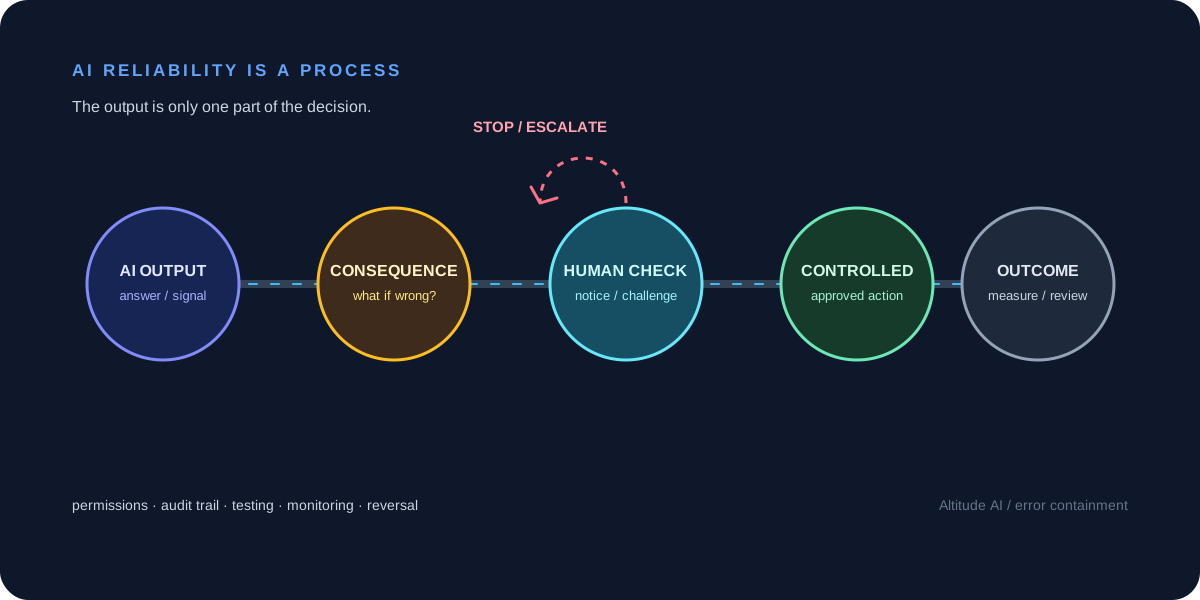
AI reliability is a business process question
AI can misunderstand information, miss context, hallucinate a source, classify something incorrectly or produce a plausible answer that does not follow from the evidence. The more serious the consequence of an error, the stronger the controls around the AI should be.
Before You Automate the Decision, Automate the Question
- What can the AI get wrong?
- How would we know?
- Who checks the result?
- What happens if nobody notices?
- Can the decision be reversed?
- What information can the AI access?
- What actions can it take?
- Do we have an audit trail?
- When should the AI hand the decision to a person?
Human oversight should match the risk
A person who is rushed, lacks the source material or cannot reject the output is not providing meaningful oversight. Reviewers need enough context, expertise and authority to notice, question and stop a consequential result.
AI agents make this more important
An assistant that suggests an answer and an agent that can send, change, approve or trigger something have different risk profiles. Agent identities, least-privilege permissions, approval gates, logging, monitoring and a tested way to stop the agent are practical controls.
AI reliability is also a security question
Prompt injection and adversarial inputs are security risks to design against. Do not rely on a prompt or model output as the only boundary around sensitive data or powerful actions.
Make AI errors containable
The important question is whether you have designed the process so that one AI mistake does not become your business's mistake.
Implement AI only after the use case is tested, controlled and measurable.